Friday, April 29, 2016

Waves, waves, everywhere - part II

The first grade finished their light wave exploration with an activity demonstrating the different types of light coming from the Sun.  The lesson started with a discussion about why we see rainbows and moves into ways that we can break ‘white’ light into the different colors.  The students were able to view sunlight, compact fluorescent light (CFL), and ‘black’ light in a homemade spectrometer and saw the different colors in the rainbow in these light source.

We also discussed light waves that we as humans can not see but that other animals can - snakes can sense infrared waves and bugs can see ultraviolet waves.  To demonstrate these ‘invisible’ waves, we used UV reactive beads.  I pulled out a clear container with white beads that said ‘RED’ on it.  The students are asked, ‘what color are these beads?’.  Most students said ‘red’ because of the label but eventually trusted their own observation that the beads were white.  Each student was able to create a keychain with the beads before we started our science experiment - what would happen if we took these beads outside?’  We listed our hypothesis and then walked to the playground for the big reveal.  They were so excited! When we came back in, one of the students stated “it’s not magic, it’s science!”

Thursday, April 28, 2016

Wednesday, April 20, 2016

The Magic School Bus is Real!

Lockheed Martin has created an amazing bus that can transport a class to the surface of Mars.  Hopefully it will visit Portland soon!

Generation Beyond


Wednesday, March 30, 2016


What is STEAM?

When we started brainstorming the Woodlawn STEAM plan last year, we used the 'three dimensions' of the Next Generation Science Standards (NGSS) as a guide.  We saw STEM and the current educational method as covering the 'Practices' and 'Core Ideas' of the NGSS.  What was missing was the 'Crosscutting Concepts'.  Overall, it is the blending of science with the 'TEM' of STEM as well as allowing more right brain activity (arts).  The Crosscutting Concepts include: 
  • Patterns
  • Similarity and diversity
  • Cause and effect
  • Scale, proportion, and quantity
  • Systems and system models
  • Energy and matter
  • Structure and function
  • Stability and change

These concepts are related to the arts.  Our concept of STEAM involves adding design, innovation, creativity, hands-on experiences, problem solving, and collaboration to our science units.  As we become more comfortable with these cross-cutting concepts we can better connect art, dance, gym classes with the curriculum in the classroom, using the same vocabulary to reinforce the 'Core Ideas' but allowing the students to practice their design thinking skills in a more kinesthetic way. 

Wednesday, March 23, 2016

Amazing Travel Posters from NASA

Imagine choosing a planet to visit, picking the best time of the year to explore.  NASA's Jet Propulsion Labs have release retro-style travel posters to peak your interested in intrasellar vacations.

NASA Travel Posters

Friday, March 18, 2016

What did you learn about salmon?

We asked our 4th graders what they learned through the US Fish and Wildlife Service's Salmon in the Classroom project.

Thursday, March 10, 2016

Waves, waves, everywhere!


Our 1st grade students have been learning about sound and light waves through stories, observation, and experiments.  During one lesson, the students stopped to think about the source of our planet’s light, the Sun.  Using the ‘Bubble of Darkness’, designed by Patricia Cooke, the students crawled into space.  The Bubble is two 12’x12’ tarps taped together with one corner open for a large fan and another corner open as an entrance.  Once inside, the students can lay on their back and watch the ‘stars’, small holes that were poked into the top tarp.  The students are asked to observe and call out any patterns they see.


The lesson was a perfect link between science and social studies as the students had just learned about the Drinking Gourd constellation that was used by the Underground Railroad to find the North Star.


Thursday, February 18, 2016

Learning Landscapes - Kinder Tree Planting


Today our Kindergarten classes teamed with the Portland Parks and Recreation Urban Forestry program to plant two Tuscarora crape myrtles. The students loved digging with mini shovels, playing with worms, and working as a team to move the trees to their new home.  This was a finale to this year’s Tree unit and the students were able practice the science terminology and steps to plant a tree from their studies. This experience helps the children develop a sense of ownership of their school and in community.  What fun it will be for today's little ones to watch these trees grow through their years at Woodlawn!

Tree Bark - News From Urban Forestry

Tuesday, February 9, 2016

'Grimm' set and STEAM

Our 8th graders were able to interview the 'Grimm' set designer in Woodlawn Park. Their goal was to identify STEAM activities on the set:
  • Science - chemistry in the paints and vinyl protectors for the "tagged" playground
  • Technology - cameras, lighting sets
  • Engineering - design and construction of the new walls under the bridge
  • Art - creation of the graffiti with colors that show up well on film
  • Math - managing budgets and coordinating the parking of huge trucks in a small neighborhood

Wednesday, January 27, 2016

The Anatomy of a River

As part of Woodlawn's Salmon in the School project, the 4th graders were able to learn about the health and anatomy of a salmon stream.  We discussed the big picture of watershed health with the Watershed Table from the Lower Columbia Estuary Partnership.  The students were able to identify both point pollution sources (factory, water treatment plant) as well as non-point sources (erosion, car oil, fertilizers, pesticides, and animal waste).  We discussed the pros and cons and ways that the pollution could be prevented from entering the watershed.
Without pollution
With pollution


The students were then able to focus on the anatomy of a healthy stream for the salmon.  This activity was linked to their studies of the salmon life cycle as we connected the best areas of a stream for the eggs, fry, and adult salmon.  Using glue, yarn, play dough, leaves, sticks, sand, and cat litter, the students created the steam path, rock berms to slow the water flow for the salmon fry, gravel patches for the eggs and alevins to hide, and healthy vegetation to prevent erosion along the stream.
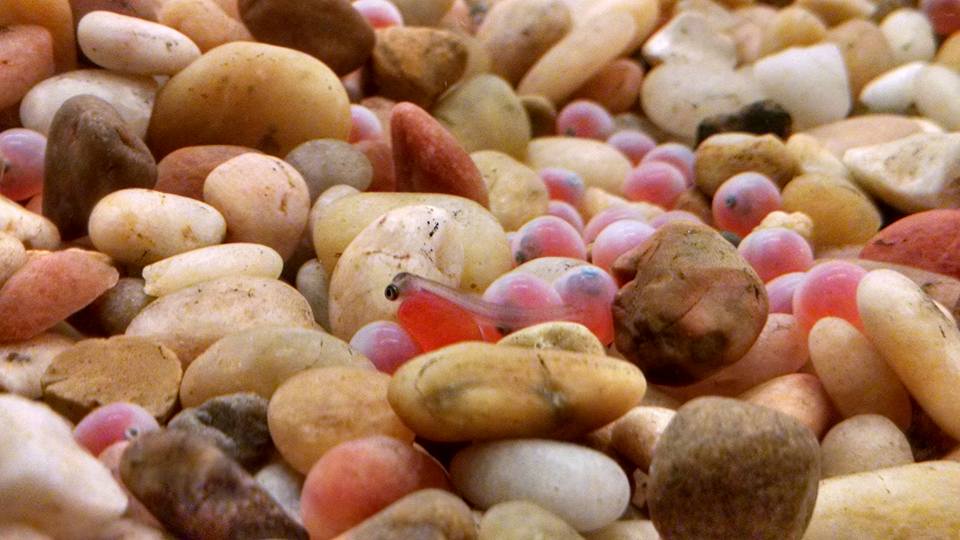
A healthy stream with eggs, an alevin, and fry

Monday, January 25, 2016

NASA astronaut plays space water ping pong with paddle designed by a PSU student


Karl Cardin, a Portland State University mechanical engineering student, was able to watch his invention of hydrophobic ping pong paddles tested this past week aboard the International Space Station.

Friday, January 22, 2016

A New Planet in Our Solar System?  NASA Takes a Look


Always keep dreaming, questioning, and debating!  

When in doubt, make sure to use Carl Sagan's rules for Critical Thinking!

Thursday, January 21, 2016


Astronomers say a Neptune-sized planet lurks beyond Pluto

Wednesday, January 20, 2016

The Heartbeat of an Alevin

A team of 3rd graders and I were able to capture a close up of one of our salmon alevins with the Proscope and iPad!


Student Salmon Videos

Today one of our little alevins was close enough to the tank wall for our students to take some 50x videos of it's head and heart.  Check it out!


Tuesday, January 19, 2016

The Eggs are Hatching!

Our first egg hatched late on Monday night!  Here are some videos from our salmon cam.  The new alevin looks like a reddish blob with a wiggly tail.  They will slowly absorb their egg sac (the red spot) over the next month and a half and become salmon fry.


Friday, January 15, 2016

Science and Dance

How can you connect science concepts with art?  Through kinesthetic learning!  Thanks to the choreography skills of Rieke's dance teacher Jocelyn Edelstein, we are able to create movement related to the 5th grade's earthquake curriculum.  The students are learning an earthquake dance to Mr. Parr's 'It's an Earthquake' song!


Are you ready to SHAKE?

Here is a fun sneak-peek into what may happen next week in the Woodlawn salmon tank!


Woodlawn Salmon in the Classroom Slideshow

From day one to the March release, we will be posting photos of the Woodlawn salmon adventures here - https://flic.kr/s/aHsksFioCu


Woodlawn Salmon in the Classroom

Thursday, January 14, 2016

Woodlawn Students and the Salmon

Over the last week and a half the salmon eggs have become part of the Woodlawn family.  Students have been helping test the water for temperature, pH, dissolved oxygen, and ammonia to make sure the tank is safe for our fish.  We have even had students reading to the eggs showing that it is good to be in a school!


Wednesday, January 13, 2016

Salmon Eggs and Technology

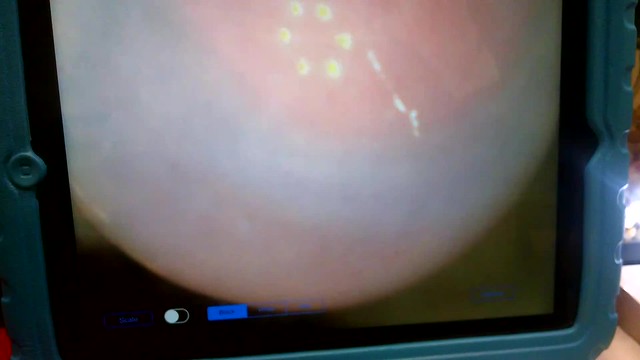
One of our salmon eggs landed close to the tank wall so we were able to use our Proscope to peak at the developing fish.  The Proscope is a 50x hand held microscope that links to our iPad for live viewing.  The students were able to view the spine of the fish as well as watch it's heart beat!  In the video, watch for the beats in the southwest corner of the pink egg.


TRIM_20160113_150858

Tuesday, January 12, 2016

Woodlawn salmon cam!

When will the first egg hatch?  Keep your eye on the eggs, they move every once in a while just like a human baby kicks, rolls, and wiggles in the womb.


Friday, January 8, 2016

EExplore the World with Google

Have you ever wanted to take your class to the Great Wall of China?  Or allow your students to observe and count fish on different coral reefs?  Since we can't fund a class trip to Mars, Google is creating technology that will allow teachers to take their class on these journeys.  Google visited our school today to demonstrate their Google Expedition Pioneer Program.  Each of the
students was able to use a smart phone in a Google Cardboard viewer that were connected to the teacher's tablet.  Once the teacher choses a location and clicks play, the students can see 360' by moving their head and body.  What an amazing teaching tool!


Thursday, January 7, 2016

The Salmon Eggs Have Arrived!

On January 6th, Mr. Johnson, a scientist at the US Fish and Wildlife Services, spoke at Woodlawn's assembly about the Salmon in the Classroom project.  He asked the students to become 'citizen scientists' and help the project with their observation of the Woodlawn Chinook eggs' development.  Over the next three months the students will be able to test the tank water and observe the salmon as they change from eggs to alevin to fry.

Wednesday, December 30, 2015

Salmon in the Classroom

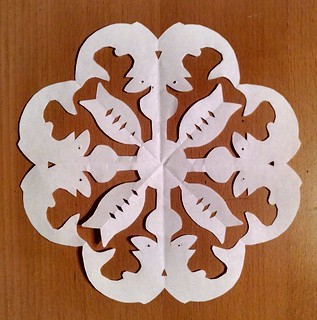
Woodlawn is excited to join the US Fish and Wildlife Services' Salmon in the Classroom program this year.  We have created a salmon snowflake to show the life cycle from egg to fry to adult.

Monday, December 28, 2015

Want to see some happy engineers and scientists?

Looking for some excitement during the holiday break? Watch the SpaceX engineers and scientists celebrate the first launch and successful landing of of a first stage rocket. This milestone will help cut space transport costs and allow rockets to be reused.

Thursday, December 17, 2015

Earthquake Slinky Science

Our students were able to demonstrate and collect data on the speed of earthquake compression and side-to-side waves with Slinkies.  By the end of the session they were able to identify which wave would arrive first and what type of damage each wave would inflict on a building.

Tuesday, December 15, 2015

Bubble of Darkness

This activity was designed by Patricia Cooke as an intro to light waves.  We adapted the lesson for our 5th grade constellation activity.  The students spend time in the Bubble of Darkness (tarps, duct tape, a fan, and pin holes) talking in small groups about what they see in the 'sky'.  Back in the classroom they created their own constellation based on modern heroes.

Friday, December 11, 2015

STEAM in Action

What if stars could dance?


Community Service, Environmental Science, Social Studies, Math, and Art

As part of the Rieke 4th grade class's Native American unit, the students were able to connect their studies of native ethnobotany with a community service activity.  The students were able to participate in an English Ivy pull at Stephen's Creek with the Portland Parks and Recreation SW Steward.  They learned about invasive species in the Park and effect of these plants on the native population.  After the ivy pull, they transported the vines back to the school for a social studies, math, and art activity.

To make a basket from the ivy vines, the students needed to know the math of weaving.  The art is focused on patterns, symmetry, and force.  First we reviewed the pattern of weaving - over, under, over, under.  While baskets and many of the weaving products are extremely symmetrical, there has to be a break from perfect symmetry in the spines of the basket.  If they use an even number, the pattern would be weak.  They would start weaving under, over, under, over around the circle only to end up with a repeat each row, causing some spine to bend out while the alternating spine bend in.  They need an odd number of spines to create a strong basket.  Finally, the students were able to experiment with force - too much pull on the vine caused it to break, too little caused the basket to have large holes.  By the end of the class, each student had a mini basket - a great use of an invasive plant.


Wednesday, December 2, 2015

Simple Machines

Today Rieke 1st graders were able to practice their engineering skills at the annual Simple Machines event.  They tested different levers with our giant teeter totter and catapults, moved a heavy box with a wedge and basic wheels, lifted a classmate with a pulley chair, and improved the design of paper airplanes and flying cups.  Special thanks to our wonderful parent volunteers who helped lead the students through the stations!


Monday, November 30, 2015

Let's learn about earthquakes!

P-waves, S-waves, surface waves?  What does that mean?

Check out this wonderful video by the Incorporated Research Institutions for Seismology:


Say tuned for our slinky earthquake lesson!

video credit:  IRIS

Friday, November 27, 2015

Math in our world

Math is all around us.  From a child's point of view so many moments in nature, at the grocery store, on the drive home - are experiences that they can stop and observe numbers, patterns, shapes, and rules.  This article by Deborah Farmer Kris describes ways to engage the innate creativity of children as they view our mathematical world.

Using Creativity to Boost Young Children's Mathematical Thinking

Monday, November 9, 2015

Let's build a planet!

As part of our STEAM program, each student will be able to invent a planet that they discovered.  There are no rules on what the planet needs to look like, everyone's planet can be different.  Each month they will be able to revisit their planet and apply their new science knowledge to their description of their planets weather, moons, habitats, food sources, animals, clothing, ...  Check out some of the planets that they have already created!

Woodlawn Planets

Thursday, November 5, 2015

Exoplanets - 500 and counting

So far we have discovered over 500 exoplanets.  Here is an amazing poster by Martin Vargic that shows 1/4 of the confirmed exoplanets arranged by temperature (left to right increase in temperature) and density (bottom to top increase in density)


Wednesday, November 4, 2015


For every action
there is an equal and opposition reaction
Newton's Third Law

The Woodlawn third graders are learning how the force from a simple kick can change the motion and direction of a soccer ball.  They also observed that the soccer ball does not keep rolling forever; other forces try to slow down the ball - friction, gravity, and the push of the classroom wall.  We practiced these words in the classroom with the fun game 'snapshot' where the student teams had to act out a vocabulary work in front of the class

Using their new vocabulary words, the class were ready to test Newton's Third Law with stomp rockets.  Each student was able to set up the rocket launcher, apply force with their foot on the rocket pad, and observe and measure the equal and opposite reaction of the rocket flight.  By the end of the class each student was able to predict which angle could make the rocket fly the furthest, either vertically or horizontally.

On the second day the class was able to measure a smaller 'reaction rocket' in the classroom and record the height of the rocket flight from different drop points.  We graphed their results and could make a hypothesis as to how high a rocket could fly from a 2m drop!

Check out more photos of our 3rd grade Woodlawn Rocket Launchers!


Monday, November 2, 2015

Just in time for Halloween!


It's as if the universe itself was trying to get into the Halloween spirit.
A large space rock resembling a skull narrowly missed Earth shortly after 1 p.m. ET Saturday. NASA says asteroid 2015 TB145 is a "dead" comet that once spewed debris across the solar system. In NASA terminology, that means it has "shed its volatiles" that would produce the visible tail seen on some comets.
    It missed Earth by about 300,000 miles (slightly farther away than the moon). The rock, dubbed 2015 TB145, was visible to those with good telescopes.
    Gianluca Masi, astrophysicist and curator of science at Planetario di Roma, featured a live stream through the Virtual Telescope Project in order to track the asteroid as it cruised by Earth. "I always like looking at those close approachers," he told CNN. "They (show that) we do live in such dynamic solar system, where collisions play such a big role in shaping planets, Earth included.
    "Now we are aware of those brushing visitors and are studying them, but in ancient times they had such strong effects on life and evolution on this planet," he said.a

    Thursday, October 29, 2015

    Water on Mars?

    New findings from NASA's Mars Reconnaissance Orbiter (MRO) provide the strongest evidence yet that liquid water flows intermittently on present-day Mars.
    “Our quest on Mars has been to ‘follow the water,’ in our search for life in the universe, and now we have convincing science that validates what we’ve long suspected,” said John Grunsfeld, astronaut and associate administrator of NASA’s Science Mission Directorate in Washington. “This is a significant development, as it appears to confirm that water -- albeit briny -- is flowing today on the surface of Mars.”
    Garni crater on Mars
    Dark narrow streaks called recurring slope lineae emanating out of the walls of Garni crater on Mars. The dark streaks here are up to few hundred meters in length. They are hypothesized to be formed by flow of briny liquid water on Mars. The image is produced by draping an orthorectified (RED) image (ESP_031059_1685) on a Digital Terrain Model (DTM) of the same site produced by High Resolution Imaging Science Experiment (University of Arizona). Vertical exaggeration is 1.5.
    Credits: NASA/JPL/University of Arizona


    Monday, October 26, 2015

    Preparing for Space

    What does it take to prepare for a trip to space?  What training do you need?  Ask Astronaut Jeanette J. Epps!


    Life as an Astronaut

    Every wonder what life is like on the International Space Station?  Dr. Don Pettit, Oregon native and astronaut is the person to ask!

    Science off the Sphere: Space Soundwaves

    Physics Central:  Science off the Sphere videos

    NASA Walking on Air: Time Lapse images from ISS